Home & Lifestyle
Creating a comfortable, efficient, and healthy living environment requires far more than basic aesthetic choices. In contemporary property management, the intersection of smart technology, energy conservation, and tailored interior design forms the foundation of a modern lifestyle. Whether you are navigating the quirks of a draughty Victorian terrace, setting up a secure network to help elderly relatives live independently, or designing a safe nursery, understanding the mechanics of your living space empowers you to make informed decisions.
The concept of home and lifestyle has evolved into a practical science. It is no longer just about decor; it is about how a home functions on a daily basis. By treating the home as an interconnected system where heating, automation, and spatial planning work together, property owners can significantly improve their quality of life while reducing running costs. This comprehensive overview explores the crucial elements of modern home optimisation, providing actionable strategies to transform any property into a resilient, efficient, and healthy sanctuary.
Mastering Energy Efficiency and Smart Home Integration
One of the most pressing challenges for modern homeowners is managing utility costs without compromising on comfort. The key lies in understanding how your property retains heat and how smart technology can eliminate wasted energy. Integrating a basic, budget-friendly IoT (Internet of Things) ecosystem can profoundly impact your annual expenditures.
Optimising Heating Systems for Older Properties
Upgrading heating infrastructure in older properties, such as a poorly insulated 1930s semi-detached house, requires careful consideration. Choosing between an Air Source Heat Pump and a modern condensing boiler often depends on the property’s existing thermal efficiency. Heat pumps operate at lower flow temperatures, meaning they require well-insulated homes to function effectively, whereas older properties might initially benefit more from an upgraded boiler and smart controls.
Think of heating your home like lighting it: you would not leave every light on in the house, so why heat every empty bedroom? By implementing smart thermostatic radiator valves, you can create heating zones. This allows you to:
- Schedule specific rooms to heat only when occupied (e.g., pre-heating a home office just before the workday begins).
- Stop wasting gas in unused guest rooms or dining areas.
- Integrate systems like Hive or Tado, which offer different compatibility levels with older boilers and traditional wiring setups.
Tackling Heat Loss and Insulation Challenges
Improving a property’s EPC (Energy Performance Certificate) rating from a D to a C is a common goal that increases property value and comfort. However, homeowners often misunderstand where heat is actually lost. For instance, a classic Victorian terrace typically loses a staggering 35% of its heat through its solid brick walls, making wall insulation a higher priority than simply upgrading windows.
When operating with a limited budget, the logical order of renovation works is critical to maximise comfort. A recommended sequence for upgrading a property is:
- Address drafts and basic airtightness around doors and floorboards.
- Top up loft insulation to the recommended 270mm depth.
- Upgrade heating controls to smart thermostats.
- Invest in wall insulation or double glazing as budget permits.
It is vital to balance insulation with proper airflow. A common ventilation mistake when topping up loft insulation or sealing bedrooms is blocking eaves or airbricks, which traps moisture and rapidly creates dangerous black mould.
Managing Smart Devices to Reduce Electricity Bills
While smart tech saves energy, it can also consume it. The proliferation of « always-on » devices in standby mode can silently add significant amounts to your annual electricity bill. However, a strategically deployed, affordable IoT ecosystem can monitor and cut power to these vampire devices, easily offsetting its initial cost.
Security is equally important when building a smart home. Homeowners must be wary of firmware vulnerabilities in cheap, unbranded smart plugs purchased from online marketplaces. These devices can act as a Trojan horse, exposing your entire private home network to external threats. Always prioritise established brands that offer regular security updates.
Leveraging Home Automation for Independent Senior Living
Home automation is revolutionising elderly care, allowing seniors to live independently and safely in their own homes for much longer. The focus here shifts from convenience to reliability, dignity, and passive monitoring.
Dignified Monitoring and Emergency Alert Systems
When monitoring elderly parents, maintaining their privacy is paramount. Passive motion sensors are widely considered more dignified and often more effective than installing intrusive cameras in the lounge or hallway. Sensors can track daily routines and alert family members if an expected movement—like entering the kitchen for breakfast—does not occur.
In a crisis, the choice of emergency alert system can be life-saving. While traditional red pull cords are standard, falls often happen out of reach of these cords. Voice-activated assistants (like Alexa) provide a highly accessible alternative, allowing a senior to simply call out for help from anywhere in the room.
Creating Supportive Environments with Automated Lighting and Audio
Smart home features can mitigate common daily risks. Simple automations can drastically reduce the likelihood of nighttime falls, which are a major cause of hospitalisation for the elderly. Effective strategies include:
- Configuring smart bulbs with motion sensors to automatically light a dim, low-level path to the bathroom at 2 AM.
- Setting automated audio reminders through smart speakers to ensure critical medication is taken.
- Timing these audio cues to trigger sequentially, requiring verbal confirmation to stop, which ensures pills are actually consumed rather than just remembered.
Mitigating Risks During Connectivity Outages
The Achilles’ heel of a smart care setup is its reliance on the internet. A sudden connectivity failure can leave critical smart health monitors completely useless. It is crucial to implement systems that have local network fallbacks or cellular backup connections, ensuring that emergency alerts can still be transmitted during a broadband outage.
Transforming Small Spaces into Functional Home Offices
With hybrid working schedules becoming the norm, creating a dedicated workspace is essential. However, many professionals are forced to adapt the notoriously small « boxroom » of a standard 3-bed terrace into a functional home office.
Ergonomics and Lighting for Maximum Productivity
In a room as small as 5m², every design choice impacts productivity and physical health. Positioning your desk correctly is the first step; it should ideally sit perpendicular to the window to benefit from natural light while preventing harsh glare on the monitor. Furthermore, selecting the right seating is critical. Relying on dining chairs or cheap aesthetic stools is a leading mistake that causes chronic back pain for home workers. Investing in an adjustable, ergonomic task chair is non-negotiable for long-term health.
For those splitting their week between home and the corporate office, automated heating schedules become vital. Programming the radiator valve to pre-heat the box room solely on your specific work-from-home days prevents heating an empty space while ensuring the room is comfortable at 9 AM.
Clever Storage and Flexible Furniture Solutions
Clutter rapidly destroys the utility of a small office. Floor-to-ceiling shelving is often the only viable way to keep a tiny room organised, utilising vertical space without encroaching on the floor plan. When selecting a desk, homeowners must weigh their options:
- Bespoke built-in desks: Maximise awkward alcoves and can add permanent value to the property by creating a dedicated study space.
- Flat-pack or fold-down desks: Offer immense flexibility, allowing the homeowner to convert the office back into a functional guest bedroom in a matter of minutes.
Designing a Non-Toxic and Safe Nursery Environment
Preparing a home for a new baby involves more than choosing a colour scheme. Infants have developing respiratory and immune systems, making them highly vulnerable to indoor air pollution and hidden domestic toxins.
Navigating Low-VOC Paints and Hidden Toxins
Renovating a nursery requires a strict focus on material safety. Standard decorating materials can release harmful chemicals into the air for months. It is crucial to understand the marketing claims on paint tins; « LowVOC » (Volatile Organic Compounds) still contains chemicals, whereas true « ZeroVOC » paints are specifically formulated to eliminate off-gassing. Even with safe paints, it is imperative to observe a safety window, allowing the room to ventilate thoroughly for several days before a baby sleeps there.
Hidden dangers often lurk in well-intentioned DIY projects. Upcycling vintage furniture from flea markets carries a severe risk of disturbing old lead paint. Sanding these items without proper testing and containment can contaminate the entire home with toxic dust.
Selecting Allergen-Friendly Flooring and Furniture
The choice of materials in a nursery extends to the floor and the furniture. Standard flat-pack furniture, often made from MDF or particleboard, can release formaldehyde for years after purchase. Seeking out solid wood or certified low-emission composite boards is a safer alternative.
Flooring also plays a critical role in respiratory health. While thick carpets may seem cosy, they trap dust mites and pet dander. Natural linoleum (made from linseed oil) is naturally antimicrobial and easy to clean, whereas a 100% natural wool carpet acts as a natural air filter, making both excellent options for reducing allergy risks in infants.
By approaching your home as an integrated environment, you can balance budget constraints with health, safety, and modern convenience. From upgrading insulation and zoning smart heating to designing non-toxic nurseries and ergonomic home offices, these purposeful lifestyle choices create a living space that truly supports and protects its inhabitants.
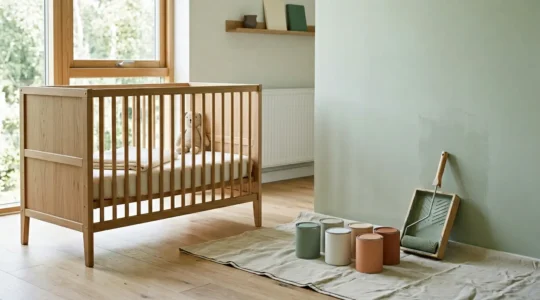
Renovating a Nursery: Why Choosing Low-VOC Paints Matters for Infant Health
Creating a truly healthy nursery goes far beyond choosing a paint colour; it’s about managing a timeline of invisible chemical risks. Standard furniture can silently release formaldehyde, a known carcinogen, for up to two years after purchase. The « Zero-VOC » claim…
Lire la suite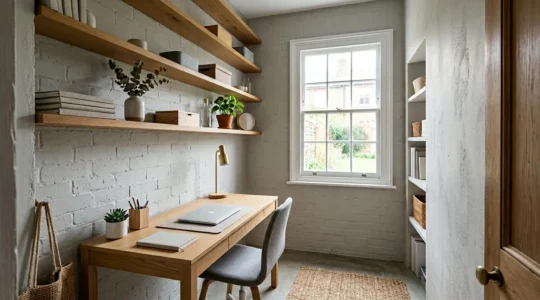
How to Architect a Functional Office in a Standard UK Box Room
Designing a functional office in a tiny box room is not about compromise; it’s about mastering spatial geometry to unlock its true three-dimensional potential. Effective storage isn’t just about shelves; it’s a matter of claiming the full vertical volume of…
Lire la suite
Improving Your EPC Rating from D to C: Which Upgrades Offer the Best ROI?
For older UK homes, the key to a cost-effective EPC jump from D to C isn’t a single expensive upgrade, but a smart, ‘fabric-first’ sequence of works. Prioritise stopping heat loss (insulation, draught-proofing) before upgrading your heating system for maximum…
Lire la suite
A Practical Guide to Smart Home Automation for Elderly Parents: Ensuring Safe and Independent Living
Effective smart home support for elderly parents is not about buying gadgets, but about designing a dignified and resilient safety system. Prioritise passive, privacy-respecting sensors over cameras to monitor wellbeing without intrusion. Build for failure by ensuring critical automations work…
Lire la suite
How a £200 IoT Ecosystem Can Reduce Your Semi-Detached Home’s Energy Bill by 15%?
The key to cutting 15% off your energy bill isn’t a single expensive gadget, but a targeted £200 digital toolkit of smart plugs and radiator valves. Identify and eliminate « energy vampires » like TV boxes and game consoles, which silently drain…
Lire la suite