Mobility & Urbanism
Navigating the modern cityscape requires a deep understanding of the intersection between mobility and urbanism. As metropolitan areas expand and environmental priorities shift, the traditional reliance on private vehicles is giving way to more sustainable, interconnected transport systems. Understanding how urban infrastructure, transportation networks, and residential zoning interact is no longer an academic exercise reserved for town planners. This dynamic directly impacts our daily routines, property investments, and overall quality of life.
Whether you are adapting to new clean air regulations, weighing the physical benefits of active travel, or considering a property purchase near major transit hubs, the contemporary urban landscape is full of both complex challenges and incredible opportunities. The global shift towards human-centric city design focuses on creating resilient spaces where communities thrive and economic vitality is perfectly balanced with environmental responsibility.
In this foundational overview, we will explore the core pillars of modern city living. From the economic benefits of pedestrianized streets and the realities of hybrid commuting to the fast-approaching adoption of autonomous transport, you will gain the practical insights needed to confidently navigate and thrive in today’s evolving metropolitan environments.
The Evolution of Neighborhoods and 15-Minute Cities
The concept of the 15-minute city centers on the idea that residents should be able to access most of their daily needs—work, education, healthcare, and leisure—within a short walk or cycle ride from their homes. This planning philosophy is fundamentally reshaping how local districts function and how property values are assessed across urban markets.
Rethinking Local Traffic and Retail Vitality
There is a common misconception that restricting private vehicle access inherently harms local businesses. However, municipal data consistently demonstrates that pedestrianization increases footfall and boosts overall retail spend. By closing side roads to through-traffic and replacing redundant parking spaces with community assets, high streets are transformed into destinations rather than mere transit corridors. Homes located in these low traffic neighborhoods often see a significant market premium due to improved air quality, enhanced community safety, and drastically reduced noise pollution.
When residents wish to influence these local changes, it is crucial to understand how municipal planning actually operates. Submitting a planning objection based purely on personal dislike is rarely effective. Instead, successful objections must be grounded in valid material considerations, such as tangible traffic safety risks, loss of privacy, or specific environmental impacts.
Mixed-Use Developments and Urban Living
Integrating commercial and residential spaces is another cornerstone of modern urbanism. Living above a shop or investing in a high-street conversion can significantly reduce your carbon footprint by minimizing the need for daily travel. However, prospective buyers must navigate specific structural and legal challenges before committing:
- Thoroughly checking leasehold clauses that might legally prevent you from subletting the apartment.
- Assessing the sound insulation quality between newly converted offices and purpose-built residential blocks.
- Avoiding the common viewing mistake of visiting only during the day, thereby missing the disruptive nightclub or hospitality noise that peaks late in the evening.
Clean Air Zones and the Shift from Fossil Fuels
To combat the severe health impacts of urban pollution, municipalities are increasingly implementing clean air zones and enforcing strict emission standards. It is important to understand that while carbon dioxide (CO2) contributes broadly to global warming, nitrogen dioxide (NO2) from diesel exhaust specifically targets local respiratory health, making it exponentially more harmful to children playing near busy intersections.
Navigating Emissions Regulations
Adapting to these essential policies requires strategic planning from all vehicle owners. For those living in or commuting through regulated zones, sticking with an older, heavily polluting vehicle can lead to a stack of costly penalty charge notices. This is frequently exacerbated by automated payment mistakes, where drivers fail to properly register their vehicles for daily AutoPay systems.
Vehicle Ownership and Strategic Upgrades
Drivers face critical, time-sensitive decisions regarding their personal transport methods. Knowing exactly when to upgrade or abandon a vehicle is a key financial skill in the modern city. Consider the following strategic steps:
- Evaluating the long-term cost-effectiveness of retrofitting an existing diesel engine versus investing in a full electric vehicle.
- Navigating local bureaucracy to secure official scrappage grants for non-compliant vans and older cars.
- Identifying the specific implementation stage where owning a second vehicle transitions from a household convenience into a heavy financial burden.
The New Era of Hybrid Commuting and Workspaces
The traditional five-day office commute has largely been replaced by flexible working arrangements. This permanent shift demands an entirely new approach to calculating travel expenses, assessing property locations, and choosing professional environments.
Optimizing Public Transport Investments
Strategic commuters know that navigating the transit system efficiently can yield significant annual savings. For instance, properties located within a ten-minute walk of high-speed transit lines command a high market premium, reflecting their long-term investment potential. To minimize ongoing travel costs, hybrid workers should evaluate their routines carefully:
- Comparing the cost-effectiveness of weekly fare caps versus annual season tickets for a standard three-day office week.
- Understanding the exact minute off-peak tap-in times begin in order to maximize daily fare savings.
- Setting up automated compensation claims for significant network delays to effortlessly recover lost funds.
- Avoiding the mistake of buying property in an area completely reliant on a single transit line, ensuring there are viable alternative routes during unexpected network strikes.
Local Coworking Hubs Versus City Headquarters
For many independent professionals, paying for a local coworking membership is actually more economical than financing a long-distance season ticket. Choosing between a hot desk or a dedicated setup depends heavily on individual productivity needs and the nature of the work. Furthermore, workers can often negotiate with employers to subsidize these local hubs as a legitimate, tax-free benefit, keeping the hybrid working model highly cost-effective.
To maximize the value of these communal hubs, members should be mindful of shared etiquette. Avoiding the networking mistake of wearing headphones all day can open doors to valuable local business connections, while knowing exactly when to arrive helps secure a silent focus booth during peak operational hours.
Active Travel: Cycling Infrastructure and Safety
Active travel is a critical component of sustainable urban mobility. However, maximizing its physical and environmental benefits requires choosing the right equipment, understanding local weather conditions, and advocating for robust street infrastructure to protect vulnerable road users.
Choosing the Right Bicycle and Rental Scheme
Commuting by bike is highly efficient, but security remains a major barrier in densely populated areas. Because a significant percentage of personal bicycles are targeted by thieves, utilizing urban rental schemes often entirely eliminates the stress of ownership and secure storage. For those who prefer personal e-bikes, choosing a monthly pass versus a pay-as-you-go model depends on daily ride duration. Users must also be hyper-aware of battery safety, as cheap, imported e-bikes frequently pose severe fire hazards in poorly ventilated residential flats. Additionally, riders must know the specific weather conditions—such as black ice or high winds—that make shared bikes dangerous, signaling when it is time to switch back to the local bus.
Advocating for Secure Storage and Safer Streets
Proper infrastructure is essential for encouraging mass cycling adoption. When municipalities invest in dedicated, physically separated cycle tracks over shared bus lanes, they can safely move significantly more people per hour. Residents can actively participate in this urban transformation through several key actions:
- Using dedicated mapping applications to discover designated quiet routes and actively avoid heavy freight traffic.
- Petitioning local councils during their annual funding windows to install secure, on-street bike hangars.
- Advocating for inclusive rack designs, such as Sheffield stands, which are far more accessible for elderly or smaller cyclists than physically demanding two-tier systems.
Furthermore, city planners must avoid fundamental design errors that place docking stations directly in high-footfall pedestrian zones, which inherently creates unnecessary friction and safety risks for both walkers and riders.
The Future Landscape: Autonomous Transport
As sensor technology and artificial intelligence rapidly improve, autonomous transport is shifting from science fiction to an imminent reality on our streets. Driverless shuttles and private automated pods are poised to permanently revolutionize everything from the morning school run to local delivery logistics.
Technological Reliability and Public Perception
Despite statistical data indicating that autonomous systems are generally much safer than human drivers, public apprehension remains remarkably high. The ultimate success of driverless urban mobility depends entirely on the proven reliability of the underlying technology. For instance, determining whether Lidar sensors or camera-based systems perform better in heavy fog or severe weather is a crucial engineering hurdle for maintaining public trust and safety standards.
Infrastructure Adaptation and Insurance Hurdles
Before autonomous shuttles can seamlessly replace traditional local bus routes, significant legal and physical barriers must be cleared. Homeowners may soon need to physically adapt their private driveways or private roads to accommodate automated delivery pods. Furthermore, the insurance industry faces a massive regulatory grey area in determining precise liability when a driverless vehicle is involved in a low-speed collision with a stationary object or parked car.
The integration of efficient mobility and urbanism is fundamental to creating the sustainable cities of tomorrow. Whether you are actively petitioning for a local bike hangar, evaluating the property premium of a new high-speed transit line, or simply preparing your household for the arrival of autonomous delivery pods, staying informed empowers you to make much smarter lifestyle and financial choices. By fully embracing these innovative infrastructures and sustainable travel modes, we can collectively build urban environments that are cleaner, substantially more efficient, and exceptionally liveable for all generations.
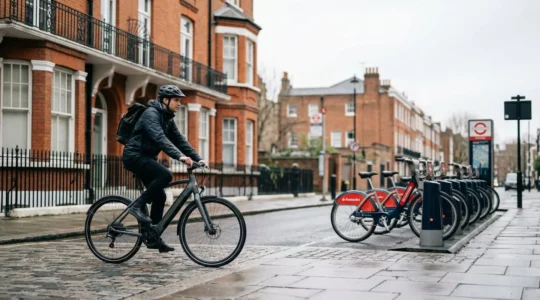
Santander Cycles vs Personal E-Bike: Which is the Best Option for London Commuting?
The best cycling choice for a Londoner isn’t about cost, but about which set of urban risks you’re more willing to manage. Owning an e-bike offers ultimate freedom but saddles you with the significant burdens of theft prevention and critical…
Lire la suite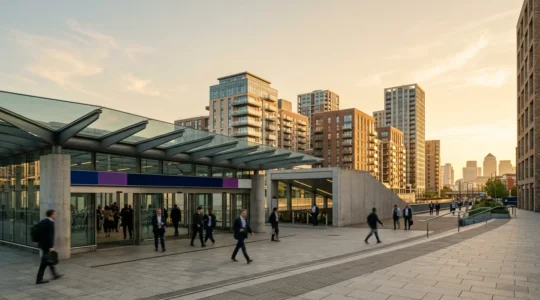
Elizabeth Line vs The Tube: Which Route Offers the Best Property Investment Potential?
The Elizabeth Line’s impact on property is undeniable, but the smartest investment isn’t about choosing one line over the other; it’s about mastering the operational realities of the entire transport network to mitigate risk and maximise value. Property premiums near…
Lire la suite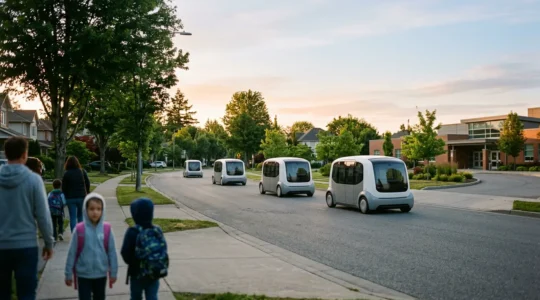
Shared Shuttles vs Private Pods: How Will Autonomous Transport Change the School Run?
The conversation about autonomous school transport isn’t about traffic flow; it’s a domestic revolution that redefines the threshold of our homes and the nature of parental supervision. Public fear of AVs stems from a psychological « perception gap, » not a lack…
Lire la suite
City HQ vs Local Coworking: Which Hybrid Model Saves More Money for Employees?
The commute to your company’s ‘free’ city office is likely costing you thousands more per year than a paid local coworking membership. Hidden expenses like lunch, coffee, and the opportunity cost of travel time often outweigh transport savings. A local…
Lire la suite
Living Above a Shop: A Smart Investment or a First-Time Buyer’s Mistake?
Living above a shop is a top-tier urban investment for first-time buyers who trade emotional decision-making for a surveyor’s analytical framework. The biggest risks—noise and legal restrictions—are quantifiable and manageable with the right tools. Proximity to amenities and infrastructure like…
Lire la suite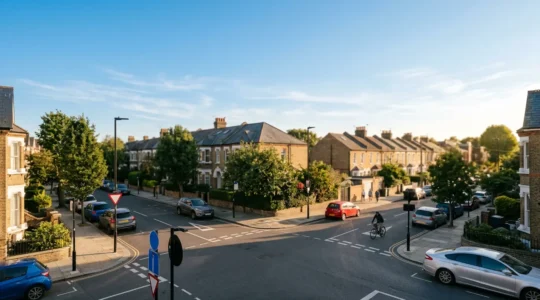
ULEZ & CAZ Compliance: Is a Euro 6 Diesel or an Electric Van the Smarter Financial Move?
The decision between a Euro 6 diesel and a full electric vehicle is no longer about purchase price; it’s about managing future regulatory risk and calculating the true Total Cost of Ownership (TCO). Stricter emission rules mean Euro 6 diesel…
Lire la suite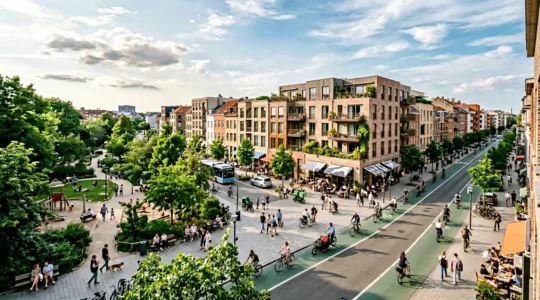
15-Minute Cities: How Will Living in Low Traffic Neighborhoods Affect Your Property Value?
The shift to 15-minute cities isn’t about banning cars; it’s a data-driven re-engineering of urban space for economic efficiency, and your property’s value depends on understanding this transition. Data from over 100 cities shows that well-designed, pedestrian-friendly streets consistently boost…
Lire la suite