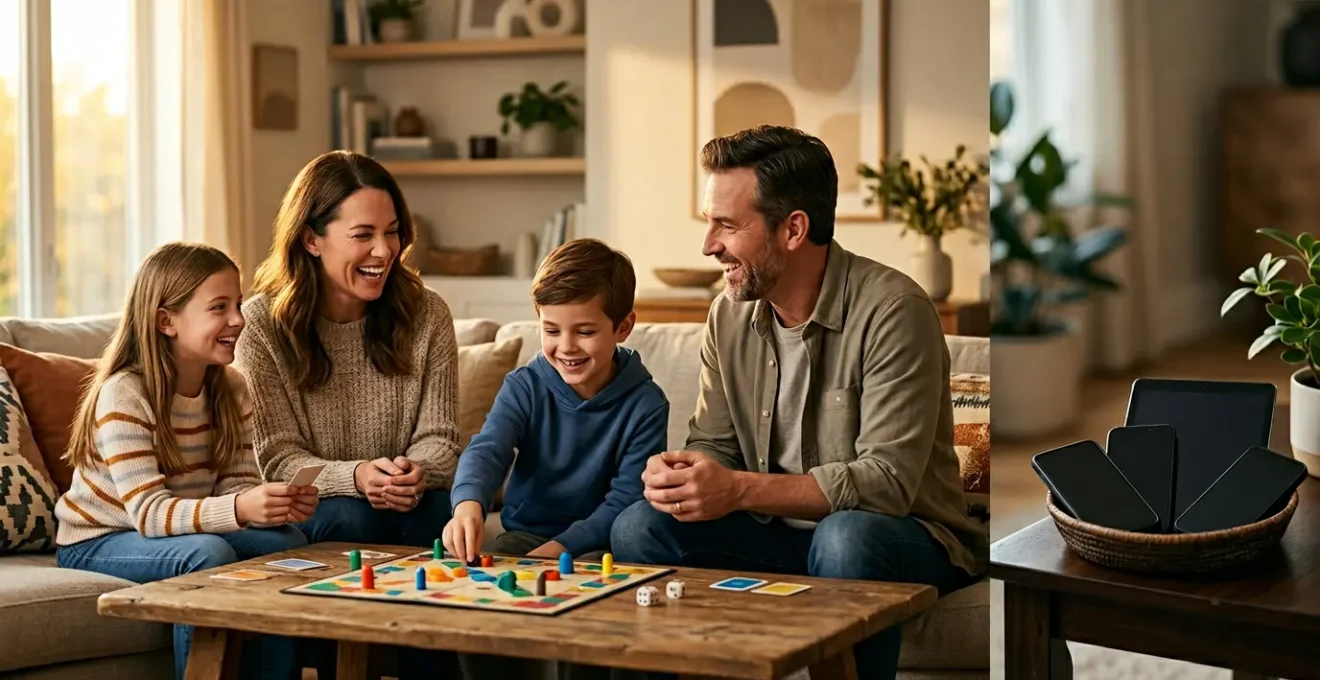
The screen time war isn’t a battle of wills; it’s a fight against deliberately addictive technology that your child’s developing brain isn’t equipped to handle.
- Most modern games and platforms are designed with psychological hooks (like intermittent rewards) that create a real sense of withdrawal, making it physically difficult for a child to stop.
- The most effective boundaries are structural and collaborative—like router-level Wi-Fi curfews and co-created family contracts—not just a timer you have to police.
Recommendation: Shift your focus from punishment to strategy. Prioritize emotional co-regulation during meltdowns and re-architect your home’s digital environment to make the rules easy to follow.
It’s a scene that plays out in homes everywhere. You announce that screen time is over, and the child who was peacefully building a digital world just moments ago erupts into a tantrum of inconsolable rage. You feel a mix of frustration, anger, and perhaps a touch of failure. You’ve tried the common advice: set timers, give five-minute warnings, maybe even use a parental control app. Yet the battles persist, turning your home into a digital battleground.
As a child psychologist specializing in digital behavior, I can assure you that this struggle is not a sign of your failure as a parent. It’s a predictable, engineered response to a sophisticated psychological environment. Many parents believe the problem is the device itself, but the real issue lies in the software’s design and the mismatch between a child’s developing brain and the powerful reward systems it encounters. The usual platitudes about “talking to your kids” or “setting limits” often fail because they don’t address the underlying mechanics of what’s happening in your child’s mind.
But what if you could change the rules of engagement? What if the key wasn’t to fight a daily war of wills, but to fundamentally re-engineer the systems in your home to build your child’s emotional resilience? This guide moves beyond simplistic advice. We will diagnose the psychological hooks that make games so compelling, explore structural defenses that make rules easier to enforce, and provide a playbook for managing the emotional fallout. This is not about winning a war against your child; it’s about equipping your family to win the peace.
This article provides a strategic framework to help you navigate this complex territory. From understanding the addictive design of popular games to drafting a contract your child will actually honor, each section offers a concrete tool to restore balance and harmony in your home.
Summary: A Psychologist’s Framework for Peaceful Screen Time Management
- Why Roblox is designed to make it physically painful for your child to stop playing?
- Router Controls or Device Apps: Which is more effective for blocking Fortnite at night?
- How to draft a contract with your 10-year-old that they will actually respect?
- The supervision mistake that leaves your child exposed to toxic gaming lobbies
- When to ban devices: The 60-minute pre-sleep rule that fixes bedtime resistance?
- Time-Out or Time-In: Which technique builds better long-term emotional resilience?
- Scratch or Python: Which language should your child learn after mastering the basics?
- Coding or Robotics: Which STEM Activity Builds Better Problem-Solving Skills for Girls?
Why Roblox is designed to make it physically painful for your child to stop playing?
That explosive reaction when you say “time’s up” isn’t just defiance. For many children, it’s a symptom of genuine psychological distress, a kind of withdrawal. Platforms like Roblox are not merely games; they are masters of a psychological principle known as a variable reward schedule. Unlike a predictable outcome (e.g., getting a paycheck every Friday), these games offer rewards at random, unpredictable intervals. This is the same mechanism that makes slot machines so compelling.
Every action could lead to a rare item, a surprise power-up, or an unexpected social interaction. This constant anticipation keeps the brain’s dopamine system on high alert, creating a state of continuous engagement that is very difficult to break. It’s not a lack of willpower on your child’s part; the system is engineered to make disengagement feel like a loss.
Roblox amplifies this principle through unpredictable, intermittent rewards that keep players constantly engaged. Every action in a Roblox game can lead to something new: a rare item drop, a surprise power-up, or an unexpected interaction with another player.
– Psychological analysis of gaming mechanics, Alibaba Product Insights
This “engineered addiction” is not just a theory; it’s the subject of legal challenges. In one notable instance, a minor filed a lawsuit alleging that the platform was deliberately designed to be addictive.
Case Study: Lawsuit Alleging Engineered Addiction in Roblox
An Israeli minor filed a class-action lawsuit claiming Roblox incorporates features specifically engineered to exploit users’ psychological processes. The plaintiff reported becoming addicted, unable to reduce usage, and experiencing a decline in social interactions. The lawsuit highlights how randomized reward systems and experiences without clear endpoints make it incredibly difficult for minors, who have underdeveloped self-regulation skills, to disengage.
Understanding this puts your child’s behavior in a new light. They are not simply misbehaving; they are reacting to a powerful psychological force. Your strategy, therefore, must be to create external structures that their developing brain cannot yet provide for itself.
Router Controls or Device Apps: Which is more effective for blocking Fortnite at night?
When it comes to enforcing a digital curfew, not all tools are created equal. Many parents rely on device-specific apps, but this approach often leads to a cat-and-mouse game with tech-savvy kids. A more robust solution lies in what I call structural controls—changing the environment itself so the rules are upheld automatically. The most powerful structural control for screen time is at the network level: your Wi-Fi router.
Device-level apps must be installed on every single phone, tablet, and computer, and can often be disabled. Router-level controls, on the other hand, manage the internet access for your entire home from a single point. You can set a household-wide “Internet off” time, blocking access for specific devices (like a gaming console) after 9 PM, without any negotiation.
This method isn’t just more effective; it shifts the source of authority. The “bad guy” is no longer the parent who has to physically confiscate a device, but the router’s pre-programmed schedule. While not foolproof—a determined child might use a mobile data hotspot or attempt MAC address spoofing—it creates a significantly higher barrier and covers all devices on your network by default. The following comparison highlights the strategic differences.
This table, based on a detailed analysis of parental control systems, breaks down the core differences.
| Feature | Router-Level Controls | Device-Level Apps |
|---|---|---|
| Coverage | Protects all devices on network automatically | Must be installed on each device individually |
| Bypass Vulnerability | Can be bypassed via mobile data hotspot, VPN, or MAC address spoofing | Tech-savvy kids can disable or remove apps |
| Effectiveness | More effective for network-wide blocking at specific times | Better for granular app-by-app control during permitted hours |
| Privacy | Minimal privacy risk (network-level traffic) | Higher privacy risk—third parties may track device location and activity |
| Ease of Setup | One-time configuration for entire household | Requires setup and monitoring on multiple devices |
| Best Use Case | Household-wide schedules and hard cutoff times | Individual device management and away-from-home monitoring |
For establishing firm, non-negotiable bedtime boundaries, router-level controls are strategically superior. They reduce daily conflict by automating the cutoff, making the rule an impersonal function of the home’s infrastructure rather than a personal command from a parent.
How to draft a contract with your 10-year-old that they will actually respect?
A top-down decree of rules is an invitation for rebellion. A 10-year-old is developing a sense of autonomy and fairness. To create a system they will respect, you must involve them in its creation. The goal is not a list of restrictions, but a “Family Tech Agreement” or a collaborative contract that everyone helps build and sign. This shifts the dynamic from dictatorship to partnership.
The process of creating the contract is as important as the contract itself. It’s a chance to articulate your family’s values and listen to your child’s perspective. When a child has a hand in setting the rules and consequences, their sense of ownership increases dramatically, and so does their compliance. The key is to frame screen time not as an entitlement, but as a privilege that comes with shared responsibilities.
This image captures the ideal spirit of the process: it’s a negotiation between partners, not a lecture. The aim is to co-create the agreement together, establishing clear expectations and shared goals. To be effective, this contract needs specific components that go beyond “don’t use your tablet too much.”
Your Action Plan: Building a Tech Contract That Lasts
- Co-create the agreement together: Ensure you get your child’s input. Position it as a team effort, not a top-down mandate, to improve compliance.
- Define your family values first: Articulate why screen time matters (creativity, communication). Ask your child about their goals for friends and hobbies to find shared principles.
- Establish clear non-negotiables: Include firm rules like “no screens after 8 PM” or “no devices in bedrooms” that are consistently enforced, alongside flexible rules your child helps design.
- Build in incentives and consequences: Transform screen time from an entitlement into a currency. Allow it to be earned through positive actions like chores, reading, or outdoor play.
- Plan for exceptions and revisit regularly: Discuss when breaking rules might be acceptable (emergencies, important messages) and schedule regular family meetings to update the contract as your child matures.
A contract is a living document. By scheduling quarterly reviews, you show respect for your child’s growing maturity and create a recurring opportunity to reinforce your family’s digital values.
The supervision mistake that leaves your child exposed to toxic gaming lobbies
One of the most common and dangerous supervision mistakes is the physical presence fallacy. You see your child on the couch, headset on, seemingly safe in your living room. You assume you are supervising. But in reality, their mind is in an entirely different room—the private, unmoderated space of a voice chat lobby. The scale of the problem is enormous; a recent survey found that an overwhelming 90% of adult gamers believe online multiplayer gaming spaces are too toxic for children under 13.
Gaming lobbies are virtual waiting rooms where players congregate. By default, many are open to anyone. While you are physically present, your child can be in a private voice channel with complete strangers, exposed to bullying, grooming, and toxic language that AI moderators cannot always catch. The real “room” isn’t your lounge; it’s the audio channel piped directly into their ears. They can easily mute the general lobby noise to have an isolated conversation, creating a direct line between your child and an unvetted adult.
This is not a theoretical risk. It is how children are exposed to language and ideas you would never permit. As a psychologist, my advice is firm and unequivocal:
At this age, there is almost zero reason for a child to be talking to strangers. If they start using ‘edgy’ slang that feels out of character or discriminatory, they’re likely picking it up from a specific toxic lobby.
– Screenwise App parenting guide, Lobbies, Discord, and Proximity Chat: A Parent’s Guide
The only effective solution is a structural one. You must go into the settings of every multiplayer game (like Fortnite, Call of Duty, or Roblox) and disable public voice and text chat features. For most games, you can still allow “Party/Squad” chat, which limits communication to a pre-approved list of your child’s actual friends. Assuming that sitting nearby is enough supervision is an illusion that leaves your child vulnerable in the unregulated wilds of toxic gaming lobbies.
When to ban devices: The 60-minute pre-sleep rule that fixes bedtime resistance?
The battle over bedtime is often directly linked to screen use. It’s not just the content that’s the problem; it’s the light from the screen itself, which is known to cause melatonin suppression, the hormone that signals to the brain that it’s time to sleep. As research from the Canadian Paediatric Society shows, children who use screens right before bed often have a harder time falling asleep and staying asleep. A hard “no screens” rule is essential, but framing it correctly can make all the difference.
Instead of a punitive “ban,” implement a “Digital Decompression” ritual. This is a non-negotiable 60-minute wind-down period before sleep, designed to help the brain transition from the high-stimulation digital world to a state of rest. The goal is to gradually reduce stimulation, not cut it off abruptly, which can trigger resistance. Based on screen time guidelines from the Mayo Clinic, an effective ritual follows a clear sequence.
This digital decompression period is not a punishment, but a vital part of sleep hygiene. It’s as important as brushing teeth. An effective wind-down can be structured as follows:
- Minutes 60-45 (Low-Intensity Digital): Transition from competitive, high-drama games to calmer activities. Allow 15 minutes of low-stimulation creative games (like Toca Boca) or collaborative building that doesn’t involve social pressure.
- Minutes 45-30 (Audio Only): Replace the visual screen with audio engagement. This could be 15 minutes of an audiobook or a podcast played on a smart speaker. The brain is still engaged, but visual stimulation is removed.
- Minutes 30-0 (Fully Analog): The final 30 minutes should be completely screen-free. Encourage physical books, drawing, journaling, or quiet conversation. This creates a clear separation from all digital devices.
To enforce this, use router-level controls to shut down Wi-Fi at the 60-minute mark and mandate that all devices charge overnight outside of bedrooms. Reframe the rule not as a restriction, but as a way to “Protect Tomorrow’s Fun”—explaining that a rested brain plays better, learns better, and feels better.
Time-Out or Time-In: Which technique builds better long-term emotional resilience?
When a post-screen time tantrum erupts, a parent’s first instinct is often to impose a consequence, like a “Time-Out.” This traditional method, which involves sending a child away to be alone, can feel like an effective way to end the conflict. However, from a psychological standpoint, it often does more harm than good. It teaches a child that their big, overwhelming feelings are unacceptable and must be dealt with in isolation. This can lead to shame and an inability to manage emotions effectively later in life.
The alternative, “Time-In,” is a cornerstone of building emotional resilience. Instead of sending your child away, you invite them closer. You sit with them through their storm of frustration, anger, or disappointment without judgment. You are not condoning the tantrum, but you are accepting the child and their feelings. This practice is known as emotional co-regulation: using your calm presence to help your child’s nervous system return to a state of balance. It’s one of the most powerful skills you can teach.
Time-In is not permissive parenting; it is active emotional coaching. It involves creating a safe space where a child can feel their emotions without being punished for them. It’s in these moments that you can teach them the language of feelings and the skills to navigate them.
Position ‘Time-In’ as ‘Emotional Co-regulation Practice’. Define it as sitting with the child through their difficult feelings without judgment, helping them label the emotion (‘It’s frustrating to lose a game, I get it’). This teaches them the skills to manage the intense feelings triggered by digital experiences.
– Parenting strategy for post-screen meltdowns, Research-based emotional regulation approach
A Time-Out sends the message: “You are too much for me.” A Time-In sends the message: “I can handle your biggest feelings. You are not alone.” Over time, this consistent support is internalized, and the child learns to self-regulate, building the foundation for lifelong emotional health.
Scratch or Python: Which language should your child learn after mastering the basics?
One of the most effective long-term strategies for managing screen time is to help your child transition from being a passive consumer of technology to an active creator. If they show an interest in how games are made, channeling that curiosity into coding can be transformative. The two most common entry points for kids are Scratch and Python, and they teach very different ways of thinking.
Scratch, with its visual, drag-and-drop blocks, is brilliant for teaching the fundamentals of event-driven logic (“when this happens, do that”). It’s perfect for younger children (6-12) and visual learners, allowing them to create games and animations quickly, providing instant gratification and building confidence. It excels at teaching sequencing and pattern recognition.
Python is a text-based, professional programming language that is surprisingly readable. It’s the next logical step for older kids (10+) who are ready for more abstract thinking. Learning Python opens the door to algorithmic thinking and real-world applications, from data analysis and automation to modding games like Minecraft. The choice depends entirely on your child’s age, learning style, and goals.
This comparative analysis provides a clear guide for which path to choose.
| Criteria | Scratch (Visual Block Coding) | Python (Text-Based) |
|---|---|---|
| Learning Paradigm | Event-driven logic – teaches cause-and-effect thinking | Procedural and object-oriented thinking |
| Best For Projects | Game creation, animations, interactive stories | Data analysis, automation, web development, Minecraft mods |
| Age Recommendation | 6-12 years (visual learners) | 10+ years (ready for abstraction) |
| Skill Development | Logic sequencing, pattern recognition, creative expression | Systematic debugging, algorithmic thinking, real-world problem solving |
| Transition Path | Can advance to GDevelop or other visual game engines | Natural progression to professional development tools and libraries |
| Alternative Third Path | Web Languages (HTML/CSS/JavaScript) for creative communicators who want to build websites to showcase art, writing, or ideas | |
There is no “better” language. The right choice is the one that sparks your child’s interest and keeps them engaged in creative problem-solving, turning screen time into a skill-building activity.
Key Takeaways
- Modern games use “engineered addiction” tactics like intermittent rewards, which can make stopping a genuinely difficult psychological event for a child.
- Effective boundaries are structural (router-level curfews, device-free zones) and collaborative (family contracts), reducing the need for constant parental policing.
- A parent’s role during a screen-related tantrum is “emotional co-regulation” (Time-In), not punishment (Time-Out). This builds long-term resilience by teaching them how to manage big feelings.
Coding or Robotics: Which STEM Activity Builds Better Problem-Solving Skills for Girls?
While coding is an excellent outlet, some children, particularly girls, thrive when they can see a tangible, real-world result of their efforts. This is where robotics has a unique advantage. Research on girls in STEM has identified collaborative impact as a powerful motivator. Building a robot that solves a real problem—like a device to feed a pet or water a plant—provides a visible and shareable outcome that can be more engaging than lines of code on a screen.
Robotics offers an integrated form of problem-solving. A child must debug not only their code but also the physical mechanics of their creation. This holistic challenge forces them to think systemically, bridging the gap between abstract logic and physical constraints. It is the ultimate hands-on application of STEM principles.
The best pathway often combines both worlds. Many modern robotics kits, like LEGO Mindstorms or Sphero, use block-based coding very similar to Scratch. This allows a child to start with a tangible project and immediate visual feedback. As their skills grow, they can transition to controlling the same robot using a text-based language like Python. This creates a seamless bridge, leveraging the motivating power of physical creation to lead them toward more complex and abstract problem-solving skills.
Ultimately, the goal is to shift your child’s relationship with technology. By encouraging activities like coding or robotics, you are helping them move from being a passive consumer of digital entertainment to an active creator of digital solutions. This not only mitigates the risks of addictive gaming but also equips them with valuable skills for the future, transforming a point of family conflict into a source of empowerment and growth.
The first step isn’t to declare war on your child’s favorite game, but to re-architect the environment and your responses. Start today by choosing one structural change and initiating the conversation for a collaborative family tech contract. This is how you move from conflict to cooperation.