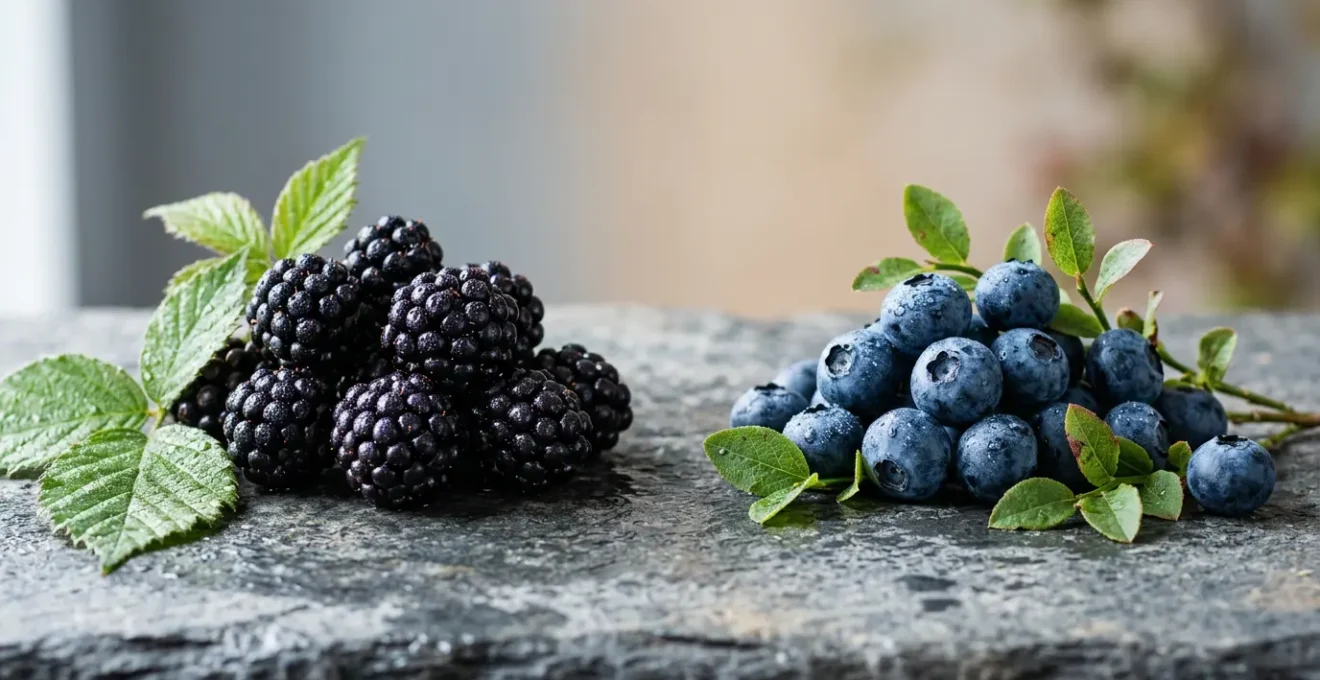
Contrary to popular belief, not all berries are created equal for skin health; wild UK blackberries significantly outperform blueberries in boosting collagen due to their unique nutritional profile and resilience.
- Wild berries develop higher antioxidant levels as a survival mechanism, making them more potent for skin repair than cultivated imports.
- Frozen berries often retain more, or equal, key nutrients like vitamin C compared to fresh berries that have been stored for days.
- The key to radiant skin is a holistic system that pairs a diet rich in specific antioxidants with strategies to neutralise hidden “collagen saboteurs” in your environment and gut.
Recommendation: Prioritise wild or frozen blackberries over fresh blueberries, control portion sizes to manage sugar intake, and adopt a holistic view that includes gut health and reducing environmental toxin exposure for maximum anti-aging benefits.
The pursuit of youthful, glowing skin often leads us down the path of expensive creams and complex routines. Yet, the true foundation of skin health is built from within. Many of us already know that a diet rich in fruit is beneficial, and when it comes to skin-boosting powerhouses, blueberries and blackberries are always at the top of the list. The common advice is simply to “eat more berries.” But this guidance is too simplistic and overlooks crucial, science-backed details that can make or break your results.
This isn’t just another article telling you to eat antioxidants. We will delve into a more strategic, holistic system for skin wellness. What if the real key to unlocking your skin’s potential isn’t just *which* berry you eat, but *where* it grew, *how* you prepare it, and even *when* you eat it? Furthermore, what if the benefits of the perfect diet could be completely undermined by hidden “collagen saboteurs” lurking in your home and your own digestive system?
This guide will deconstruct the science of skin nutrition. We will explore why a wild blackberry from a British hedgerow is superior to a supermarket blueberry, how to pair foods for maximum effect, and how to protect your collagen from unexpected threats. By the end, you will have a complete blueprint for nourishing your skin from the inside out.
Summary: A Holistic Guide to Collagen-Rich Skin
- Why wild blackberries from the hedgerow pack more antioxidants than supermarket imports?
- How to pair Vitamin C rich fruits with nuts to improve nutrient uptake?
- Frozen mix or Fresh punnet: Which retains more nutrients for your morning smoothie?
- The portion mistake that turns healthy antioxidant snacking into a sugar spike
- When to eat your antioxidant dessert: The pre-sleep window for cellular repair?
- Why standard furniture can release formaldehyde for 2 years after purchase?
- Why 90% of your serotonin is produced in your digestive tract and not your brain?
- Renovating a Nursery: Why Choosing Low-VOC Paints Matters for Infant Health
Why wild blackberries from the hedgerow pack more antioxidants than supermarket imports?
Not all berries are born equal. While supermarket blueberries are often touted for their health benefits, the humble wild blackberry, found in abundance across the UK, is a vastly superior choice for skin health. The secret lies in a concept called environmental stress. A wild plant growing in a hedgerow has to fight for its survival against inconsistent weather, pests, and variable sunlight. This struggle forces it to produce a higher concentration of protective phytochemicals, particularly a class of antioxidants called anthocyanins, which give blackberries their deep purple-black hue.
These anthocyanins are powerful defenders against oxidative stress, the process by which free radicals damage skin cells and break down collagen. Supermarket berries, grown in highly controlled, optimised environments, simply don’t need to produce these compounds in such high quantities. The result is a less potent fruit. In fact, research from UK nutrition specialists shows that just a small handful of wild blackberries can be incredibly nutrient-dense, with around 30mg of vitamin C in just 15 berries, which is nearly half the daily recommended intake and a significant boost for collagen synthesis.
When you choose wild blackberries, you are consuming a fruit that has built-in resilience. You are essentially transferring that robust, protective power to your own cells. Foraging for these gems in the UK’s extensive hedgerow networks isn’t just a quaint pastime; it’s a strategic move to acquire the highest quality, most potent antioxidants available for your skin.
How to pair Vitamin C rich fruits with nuts to improve nutrient uptake?
Consuming antioxidant-rich fruits is the first step, but ensuring your body can actually absorb and utilise those nutrients is the second, equally crucial part of the equation. This is where the concept of nutrient synergy comes into play—the idea that certain foods, when eaten together, enhance each other’s benefits. One of the most important pairings for skin health is combining Vitamin C-rich fruits, like blackberries, with a source of healthy fats, such as nuts or seeds.
Many essential skin nutrients are fat-soluble. This includes Vitamin A (crucial for cell turnover), Vitamin E (a powerful antioxidant that protects cell membranes), and Vitamin K (involved in skin healing). Without fat present in the same meal, your body’s ability to absorb these vitamins from your small intestine is severely limited. Sprinkling a handful of almonds, walnuts, or chia seeds onto your berry bowl provides the necessary fat to act as a transport vehicle, ensuring these precious vitamins reach your bloodstream and, ultimately, your skin cells.
As the experts at New Life Nutrition & Wellness explain, this principle is fundamental to getting the most from your food:
Vitamins A, D, E, and K require fat to be absorbed. Without fat, the body can only access a fraction of these nutrients.
– New Life Nutrition & Wellness, Food Synergy: How Nutrient Pairing Boosts Absorption
This synergistic effect isn’t limited to fat-soluble vitamins. Other pairings also provide benefits; for example, studies demonstrate that Vitamin C can dramatically increase the absorption of plant-based iron, a mineral important for healthy skin tone. By simply adding a handful of nuts to your berries, you transform a healthy snack into a highly bioavailable, super-optimised meal for your skin.
Frozen mix or Fresh punnet: Which retains more nutrients for your morning smoothie?
It’s a common belief in the wellness world that “fresh is always best.” We instinctively reach for the pristine punnet of fresh berries, assuming they are nutritionally superior to their frozen counterparts. However, when it comes to nutrient retention, especially for delicate vitamins like Vitamin C, the science tells a surprisingly different story. For your morning smoothie, the bag of frozen berries is often the smarter choice.
Fresh berries begin to lose nutrients the moment they are picked. During the long journey from farm to packing house to supermarket shelf—and then to your fridge—light, heat, and oxygen degrade their delicate vitamin content. In contrast, frozen berries are typically flash-frozen at their peak ripeness, just hours after being harvested. This process locks in their nutrients, effectively pressing the “pause” button on degradation. A landmark University of Georgia study published in 2015 found that for many fruits, the concentration of Vitamin C (ascorbic acid) was actually higher in frozen samples compared to fresh samples stored for five days.
Case Study: UC Davis Frozen vs. Fresh Research
A comprehensive study by the University of California, Davis, in partnership with the Frozen Food Foundation, reinforced these findings. When comparing frozen and fresh blueberries, researchers discovered that the overall nutritional value was generally equal or even superior in the frozen produce. Specifically, water-soluble vitamins like Vitamin C and riboflavin were found in the same or greater amounts in frozen berries. The study also noted that the freezing process had a positive effect on Vitamin E content, while minerals and total phenolic compounds (antioxidants) were well-conserved.
This means you don’t have to compromise on nutrition for the sake of convenience or budget. Choosing frozen berries for your smoothies is a scientifically sound strategy to ensure you’re getting the maximum antioxidant and vitamin payload for your skin, often at a lower cost and with less food waste.
The portion mistake that turns healthy antioxidant snacking into a sugar spike
While berries are celebrated for their skin-boosting antioxidants, it’s crucial to remember that they also contain sugar. Consuming too much, even from a “healthy” source, can lead to a significant blood sugar spike. This surge triggers an inflammatory response in the body and a process called glycation, where excess sugar molecules attach to proteins like collagen and elastin, making them rigid and brittle. Glycation is one of the primary drivers of premature skin aging, leading to fine lines and loss of firmness. This is a classic “collagen saboteur” in action.
The key to avoiding this is understanding the difference between fruits. As we established, blackberries are the antioxidant champion, and they are also the winner in terms of blood sugar management. According to comparative nutrition data, the Glycemic Index (GI) of blackberries is a very low 25, while blueberries have a moderate GI of 53. This means blueberries raise blood sugar more than twice as quickly as blackberries do. A large bowl of blueberries, perceived as a healthy snack, can have a surprisingly high glycemic impact.
Portion control is therefore paramount. A sensible portion of berries is about one cup or a generous handful (around 150g). Sticking to this amount, especially with lower-GI options like blackberries and raspberries, allows you to reap the antioxidant benefits without unleashing the inflammatory, collagen-damaging effects of a sugar spike. It’s about being strategic, not just enthusiastic.
Action Plan: Audit Your Antioxidant Snacking
- Identify Your Berry Choice: List the berries you consume most often. Are they high-GI (like blueberries) or low-GI (like blackberries, raspberries)?
- Measure Your Portions: For one week, physically measure your typical serving size. Is it closer to one cup or are you over-consuming?
- Analyse Your Pairings: Are you eating berries alone? Practice adding a source of fat and protein (a handful of nuts, a spoonful of Greek yogurt) to every serving to slow sugar absorption.
- Note Your Timing: Are you snacking on large bowls of fruit late at night? Consider moving this snack to earlier in the day or reducing the portion size before bed.
- Create a Substitution Plan: Based on your audit, commit to swapping at least one high-GI fruit snack per week for a low-GI blackberry alternative to better manage your skin’s health.
When to eat your antioxidant dessert: The pre-sleep window for cellular repair?
Beyond what you eat and how you pair it, *when* you eat can significantly influence your skin’s ability to repair and regenerate. The emerging science of chrono-nutrition—the study of how timing of food intake impacts health—suggests that consuming your antioxidant-rich foods in the evening could provide a powerful boost to your skin’s overnight renewal processes.
During the day, your skin is in defense mode, fending off UV radiation, pollution, and other environmental aggressors. At night, it switches to repair mode. It’s during deep sleep that your body ramps up its production of growth hormone, which facilitates the repair of damaged cells and the synthesis of new proteins like collagen and elastin. This is your body’s innate cellular repair window.
Providing your body with a fresh supply of antioxidants just before this window can be a highly effective strategy. These antioxidants can help neutralise the free radicals accumulated during the day and provide the necessary building blocks, like Vitamin C, for collagen synthesis. As research on circadian biology confirms, the body’s natural repair and regeneration of collagen peaks during the first few hours of deep sleep. By timing your antioxidant intake to coincide with this, you are essentially supplying your skin’s “night shift” with the exact tools it needs to do its job effectively.
A small, low-sugar dessert like a handful of blackberries with a dollop of Greek yogurt one to two hours before bed can be an ideal pre-sleep snack. It delivers a potent dose of antioxidants and protein without causing a disruptive sugar spike, perfectly setting the stage for overnight skin rejuvenation.
Why standard furniture can release formaldehyde for 2 years after purchase?
After perfecting your diet with antioxidant-rich foods, it would be disheartening to learn that your home environment is actively working against your skin health. One of the most pervasive “collagen saboteurs” is formaldehyde, a volatile organic compound (VOC) commonly found in standard, mass-produced furniture. This chemical is not just a surface contaminant; it can be released into your indoor air for years.
Formaldehyde is a key ingredient in the industrial resins and adhesives used to create pressed-wood products like particleboard, MDF (medium-density fiberboard), and plywood—the building blocks of most affordable furniture, from bookcases to kitchen cabinets. The chemical doesn’t stay locked within the wood. It slowly turns into a gas and leaks out into your home in a process called “off-gassing.” This process is strongest when the furniture is new but can continue at lower levels for two years or even longer.
When inhaled, formaldehyde is a systemic irritant that contributes to the body’s total toxic load. This triggers a low-grade, chronic inflammatory response and increases oxidative stress throughout the body. This systemic oxidative stress diverts your body’s resources—including the antioxidants from your diet—to fight this internal battle, leaving less available for skin repair and collagen protection. In essence, while you’re eating blackberries to fight free radicals, your furniture could be generating more of them internally.
Why 90% of your serotonin is produced in your digestive tract and not your brain?
Another critical, yet often overlooked, factor in skin health is the state of your gut. The connection between digestive wellness and radiant skin, known as the gut-skin axis, is a cornerstone of modern dermatology. And at the heart of this connection lies a surprising fact: the vast majority of your serotonin, the “feel-good” neurotransmitter, is produced not in your brain, but in your gut.
Approximately 90% of your body’s serotonin is synthesized by specialized enterochromaffin cells within the lining of your digestive tract. The health and balance of your gut microbiome—the trillions of bacteria living in your gut—play a direct role in regulating this production. A healthy, diverse microbiome supports robust serotonin production, contributing to mood stability and overall well-being. Conversely, an imbalanced gut (dysbiosis) can impair this process.
But what does this have to do with collagen? A gut in a state of dysbiosis is often an inflamed gut. This chronic, low-grade inflammation doesn’t stay confined to the digestive system. It can become systemic, spreading throughout the body and manifesting directly on the skin as acne, eczema, rosacea, and accelerated aging. This inflammation is another potent “collagen saboteur,” actively breaking down the skin’s structural proteins. Therefore, poor serotonin production is not the cause, but a key indicator of a dysfunctional gut environment that is likely compromising your skin.
Key takeaways
- True skin wellness is a holistic system, not a single ingredient. It involves strategic nutrition, lifestyle choices, and environmental awareness.
- Wild-foraged or frozen blackberries are nutritionally superior to fresh, imported blueberries for boosting collagen due to higher antioxidant levels and better nutrient retention.
- To combat premature aging, you must actively identify and neutralise “collagen saboteurs” like sugar spikes from poor portion control, environmental toxins (VOCs), and internal inflammation from poor gut health.
Renovating a Nursery: Why Choosing Low-VOC Paints Matters for Infant Health
The final pillar in our holistic skin health strategy is actively reducing our exposure to environmental toxins. While the topic of low-VOC (Volatile Organic Compound) paints is often discussed in the context of renovating a nursery to protect an infant’s delicate system, the principle applies to everyone. The air you breathe inside your home can be a significant source of chronic inflammation and oxidative stress, directly impacting your skin’s health and vitality.
Standard paints, varnishes, and sealants release hundreds of VOCs into the air as they dry and cure. These chemicals, like benzene, acetone, and formaldehyde, contribute to indoor air pollution that can be far more concentrated than outdoor air. Just like the formaldehyde from furniture, these airborne compounds are inhaled and absorbed into the bloodstream, increasing the body’s toxic load. This forces your system into a constant state of defense, creating systemic inflammation that accelerates the breakdown of collagen and elastin.
Choosing low-VOC or zero-VOC paints is a powerful step in creating a “pro-collagen” home environment. By minimizing your exposure to these chemical stressors, you reduce the burden on your body’s detoxification systems. This frees up your body’s antioxidant resources, allowing them to focus on their primary job: protecting and repairing your skin cells. You are effectively removing a major obstacle, allowing the benefits of your nutrient-rich diet to shine through. The focus on a nursery simply highlights the stakes; what is critical for an infant is beneficial for an adult.
Ultimately, achieving and maintaining youthful, collagen-rich skin is a comprehensive effort. By choosing the most potent berries, timing and pairing them correctly, and actively mitigating the impact of hidden saboteurs in your diet, home, and gut, you create a powerful, synergistic system for lasting skin wellness. Your next step is to begin implementing these strategies, starting with a simple audit of your current habits.